







Understanding Lipid Profiles: Why Your Cholesterol Is More Than Just a Number
Understanding Lipid Profiles : Why Your Cholesterol Is More Than Just a Number
"My cholesterol is high, Doc." - We hear this all the time, but did you know that cholesterol isn't as simple as "high" or "low"? There are different types of cholesterol in the body, and understanding your complete lipid profile could be key to preventing heart disease and stroke.
What Is a Lipid Profile?
A lipid profile is a complete blood count that measures the various types of fats (lipids) in your blood. This test includes:
-
Total Cholesterol (TC)
The total cholesterol in the blood. This is the often-cited "headline" number.
-
Triglycerides (TG)
A type of fat the body stores for energy. High levels increase the risk of heart disease and pancreatitis.
-
HDL Cholesterol (High-Density Lipoprotein)
It's called "good cholesterol" because it helps clear bad cholesterol from your blood vessels. The higher the level, the better!
-
LDL Cholesterol (Low-Density Lipoprotein)
It's called "bad cholesterol" because it can build up on blood vessel walls and cause blockages. The lower the level, the better.
Why Are These Numbers Important?
Think of cholesterol as a vehicle that transports fat in the bloodstream:
LDL is a truck that transports cholesterol TO the walls of blood vessels (bad)
HDL is the truck that transports cholesterol FROM the walls of blood vessels back to the liver (good)
What is dangerous is not only high total cholesterol, but an imbalance between good and bad cholesterol.
Sample case:
Person A: TC 220, LDL 150, HDL 30
Person B: TC 220, LDL 120, HDL 80
Both have the same total cholesterol, but Person B is much healthier because HDL is high and LDL is lower!

Why is High Cholesterol Dangerous?
Excess bad cholesterol (LDL) can build up on blood vessel walls and form plaque. This process is called atherosclerosis, which can cause:
- Coronary heart disease - Blood vessels to the heart are blocked
- Stroke - Blood vessels to the brain are blocked
- Peripheral artery disease - Blocked blood vessels to the legs
What's frightening is that high cholesterol often has no symptoms until a heart attack or stroke occurs. That's why it's called the "silent killer."
Who Needs a Lipid Profile Check?
Lipid profile examination is recommended for:
- Age 20 years and above - At least once every 5 years
- Age 40 years and above - Every 1-2 years
- Have a family history of heart disease - More regular
- Obesity or overweight
- Diabetes or prediabetes
- Hypertension
- Smoker
- Sedentary lifestyle
- High saturated fat diet
Tips for Maintaining a Healthy Lipid Profile
- Healthy Diet for the Heart
- Reduce saturated fat (fried foods, thick coconut milk, fatty foods)
- Increase fiber (oatmeal, fruit, vegetables)
- Consume good fats (fish, nuts, avocado)
- Limit sugar and refined carbohydrates
- Regular Exercise
- Minimum 30 minutes of moderate activity, 5x a week
- Brisk walking, jogging, swimming, or cycling
- Maintain Ideal Body Weight
- Losing 5-10% of body weight can significantly improve lipid profiles.
- Avoid Smoking and Limit Alcohol
- Cigarettes lower HDL (good cholesterol)
- Manage Stress
- Chronic stress can increase cholesterol
- Routine Monitoring
- Check your lipid profile regularly to track progress.
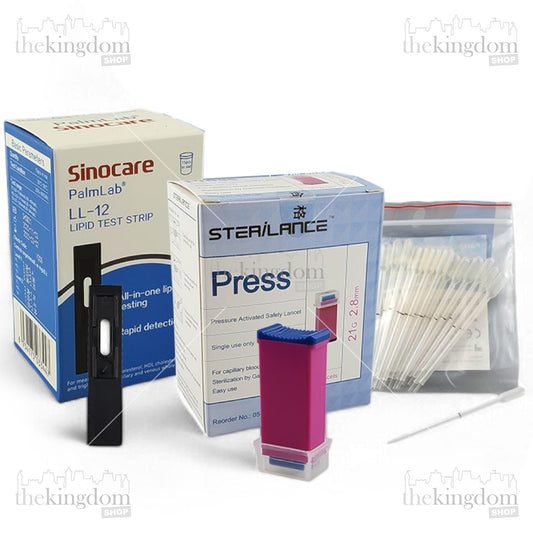
Easy Home Monitoring: Standard LipidoCare Analyzer
Previously, a complete lipid profile test required a trip to the lab and a wait of several days. Now, there's a more convenient solution with the Standard LipidoCare Analyzer.
This portable tool allows you to:
- Check your complete lipid profile at home - TC, TG, HDL, LDL, plus Glucose
- Fast results in minutes - No need to wait long
- Minimal blood sample - Only a small amount of blood from the fingertip is needed.
- High accuracy - Results comparable to lab
- Economical for routine monitoring - No need to go back and forth to the lab
- Suitable for the whole family - One tool can be used together
Perfect for:
Those who need regular monitoring (diabetes, high cholesterol, heart disease)
Family with a history of heart disease
Those who are undergoing a diet and weight loss program
Who wants to be more proactive about health
Conclusion
Cholesterol isn't just a single number, but a combination of various components that need to be understood comprehensively. By understanding your lipid profile, you can take preventive measures before it's too late.
Remember: Prevention is always better than cure. Start paying attention to your lipid profile now, because heart health is a long-term investment!
Tags:
Previous
Blood Sugar Monitoring for Diabetics: Sinocare iCan i6 CGM.
Next
Guide to Choosing the Right Crutch for Optimal Recovery